
Gurnee Directory Collections by Year
Gurnee researchers usually begin with Waukegan-area holdings because directory titles and coverage followed the county's publishing market, not today's village line. The official University of Illinois holdings guide identifies Polk and Harris editions at Waukegan Public Library. It lists long but uneven runs, with gaps that matter when a household moved between editions. Newberry Library adds a later far-north Waukegan group. Warren-Newport Public Library contributes digitized indexes to local-history binders, while telephone books offer a different address and number trail.
| Collection | Years | Where Held | Access |
|---|---|---|---|
| Polk/Harris Waukegan city directories | 1874 through 1959-current, in listed clusters | Waukegan Public Library holdings guide | Confirm volume and Gurnee coverage with reference staff |
| Far-north Waukegan editions | 1978; 1980-81; 1983; 1986-96, with gaps | Newberry Library | Research-library access; verify the edition |
| Waukegan-area telephone books | 1930s-1950s | Waukegan Public Library | Address or telephone lead; exact run unconfirmed |
| Illinois History Collection binders | Varies by binder | Warren-Newport Public Library | Digitized indexes and library databases |
| Local newspapers | 1845-2018, title-specific gaps | Waukegan Public Library | Microfilm, databases, and obituary email lookup |
The institutional guide dates from 1999, and “1959-current” reflects that guide's publication date, not a promise of an uninterrupted shelf today. Confirm that a volume remains available and inspect its title page, index, and locality heading. Exact Gurnee street coverage can change between editions. No official source found a complete current reverse-directory run, so reference staff are the right fallback when the catalog is silent.
Gurnee City Directory Research Desks
The Warren-Newport Public Library database desk is the closest local start. Its county-described resources include digitized Illinois History Collection binder indexes, genealogy databases, historical newspaper access, and research classes. The Waukegan Public Library genealogy collection holds city directories, census sources, maps, photographs, and extensive newspaper microfilm. A researcher who cannot find a volume online should ask each desk for the target year, publisher, locality coverage, format, and any use limits.
The Warren-Newport collection page gives a practical view of the database access point.
Open Warren-Newport's research databases before visiting.
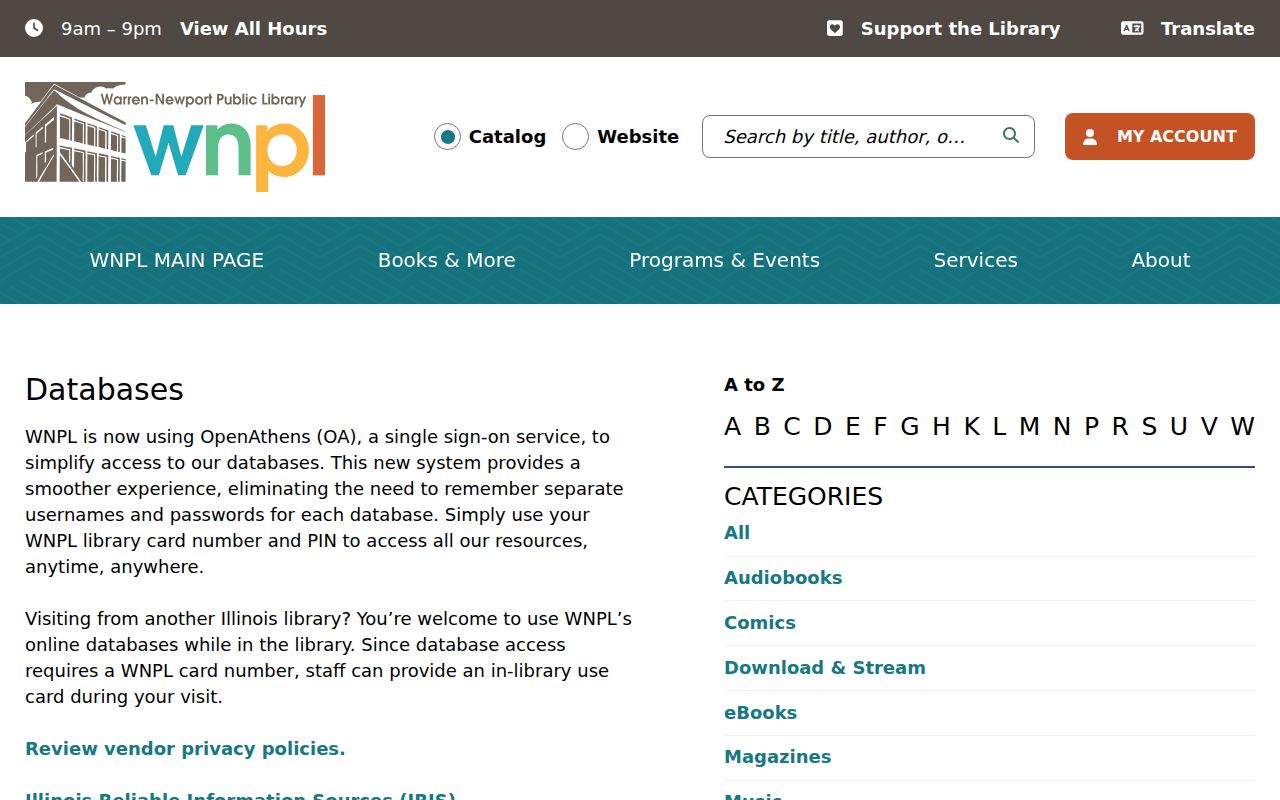
The screen helps identify which sources can be reached remotely and which may require a library card or an in-person request.
Lake County's research-centers directory also points to Zion-Benton, Lake Villa, Vernon Hills, Newberry, and local society collections. These nearby desks matter when a Gurnee name appears under Warren Township or Waukegan rather than the present village label.
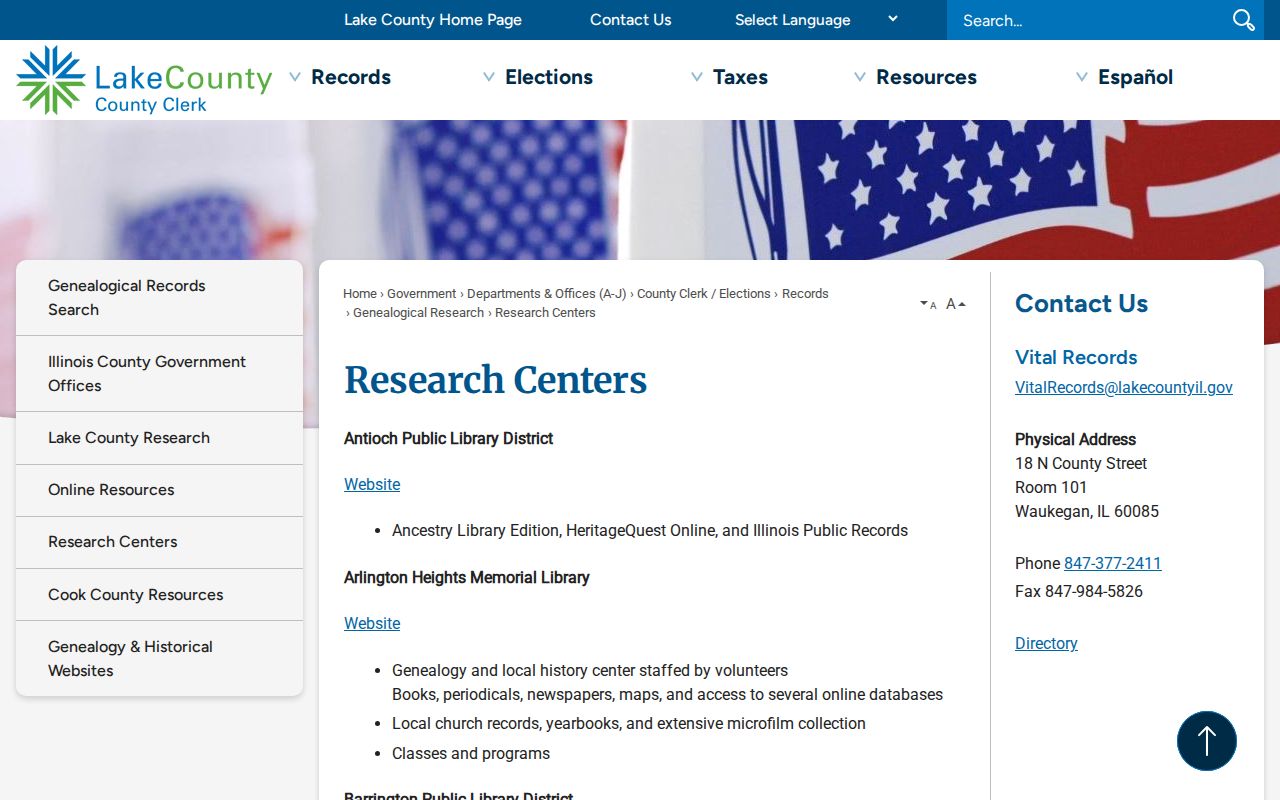
The county listing turns a failed catalog search into a set of specific reference desks rather than a dead end.
Gurnee Directory Publisher Clues
Keep the publisher with every citation. Polk and Harris editions may use different territory, abbreviations, and street sections even when their dates are close. The documented Waukegan sequence includes 1874; 1892-93; 1895-1901; 1903-04; 1908-09; 1913-14; 1916-17; 1922; 1925; 1927-35; 1939-49; 1951-57; and varying coverage from 1959 forward. Those clusters show why a missing person in one year should prompt a search in the next available edition, not a claim that the person left Lake County.
Newberry's official guide lists later far-north Waukegan editions for 1978, 1980, 1981, 1983, 1986, 1987-88, 1989-90, and 1991-96. Check the actual volume rather than treating its catalog label as proof that every Gurnee street appears. A clean source note records the title, publisher, edition year, page, locality heading, repository, and date consulted.
Reading a Gurnee Directory Entry
A city directory entry must be read from the page in hand. The official research did not locate an open scan of a specific Gurnee entry, so no standard field should be assumed. The Library of Congress guide says historic entries are generally alphabetical and often include address or telephone information, while individual volumes may add other facts. Photograph or transcribe the abbreviation key and locality heading before interpreting initials or symbols.
| Identity | Exact spelling, initials, and any visible relationship notation |
|---|---|
| Location | House number, street wording, locality heading, and page |
| Edition | Title, publisher, year, and coverage notes |
| Symbols | Only meanings confirmed by that volume's abbreviation key |
| Arrangement | Alphabetical, street-order, telephone, or another visible index |
- Criss-cross directory
- A directory arranged by street address or telephone number instead of only by surname.
- Householder index
- A list organized around households or addresses; its fields depend on the edition.
- Abbreviation key
- The volume's own legend for shortened words and symbols. Save it before decoding an entry.
A directory line is a dated historical lead. It does not prove current occupancy, ownership, or identity. Match an address to a deed, census, obituary, or another dated source before joining records for people with the same name.
Gurnee Reverse Directory Leads
The ISGS guide confirms Waukegan-area telephone books from the 1930s through the 1950s. These may help turn an old telephone number or address into a name, depending on the volume's coverage. The official library pages do not provide a complete Gurnee criss-cross title list. Ask whether Gurnee is indexed on its own, whether the street section is complete, and whether the book is walk-in or reference-only.
Use a reverse result as a lead, not a final identification. Copy the publisher, edition, page, address, and name exactly. Then compare the date with a parcel deed, newspaper notice, obituary, or census record. The modern address-based workflow belongs on the Gurnee street directory; historical telephone and street-order volumes remain the focus here.
Gurnee Names Beyond Directories
Waukegan Public Library provides the strongest nearby obituary and newspaper fallback. Its listed runs begin with Little Fort papers in the 1840s and continue through Lake County News-Sun coverage ending in 2018, with title-specific gaps. A free obituary lookup can be requested by email with a name, death date, and contact information. Staff may use microfilm or local newspaper files, but a result is not guaranteed.
Review Waukegan's genealogy services and request requirements.
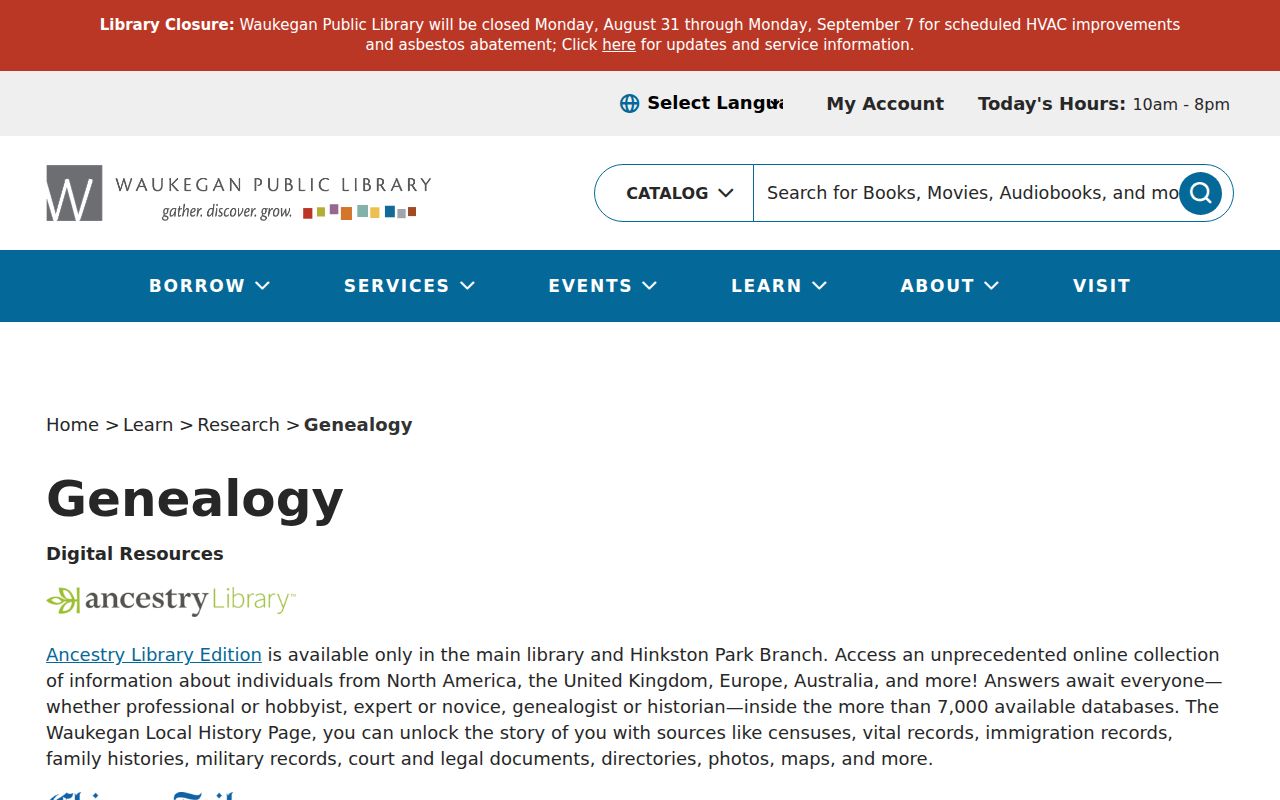
The library's mix of directories, newspapers, census material, maps, and photographs makes it useful for testing a name that appears once in a directory.
The Raymond Research Library adds a people file, obituaries, census records, military material, scrapbooks, and directories. Cemetery lists and the County Clerk genealogy index can supply another dated check. Keep different spellings separate until two records share more than a name.
Gurnee History at Mother Rudd
Mother Rudd House gives Gurnee directory research a place-specific historical anchor. The building served as a stagecoach stop, voting place, post office, and town hall, and it now houses Warren Township Historical Society artifacts and photographs. The museum is at 4690 Old Grand Avenue. Its published hours are Tuesday from 9:30 to 11:00 a.m. and by appointment, but visitors should confirm before going.
Read the Warren Township Historical Society's Mother Rudd history.
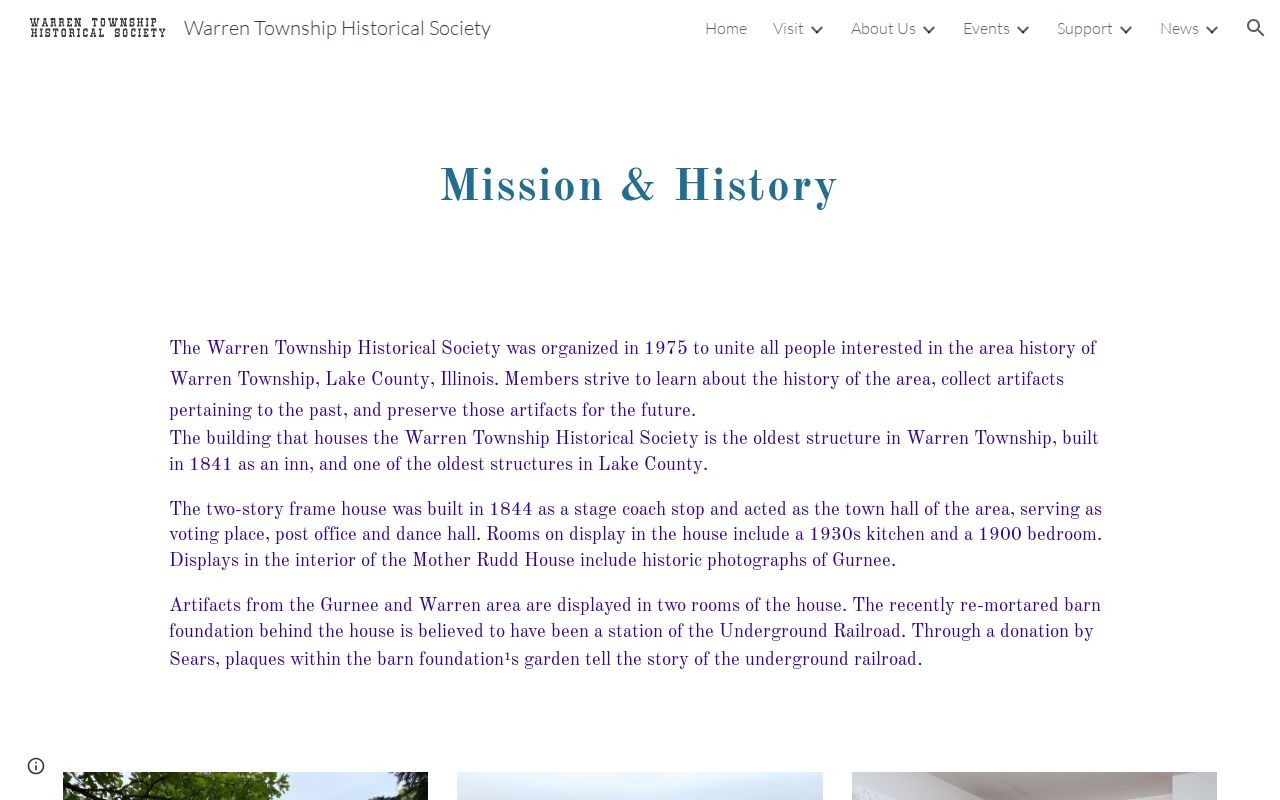
The museum can add photographs and local context to a directory name, but it is not a current resident roster or an unrestricted name index.
Gurnee's 1873 railroad arrival, Old Grand Avenue, and Warren Township labels can explain why an older entry does not match modern place names. Preserve the wording used by the historical source rather than silently converting it to today's municipality or ZIP.
Lake County Directory Gaps
Missing years are only one kind of gap. Lake County's courthouse history records an 1875 fire and says records were saved in an adjacent building, while Waukegan library history describes the loss of an earlier reading room in an 1857 fire. These events are clues about custody and survival, not proof that every title or record series was preserved.
Lake County's historical research page routes searches toward deeds, probate, naturalization, plats, cemetery material, and other sources that can bridge a directory gap.
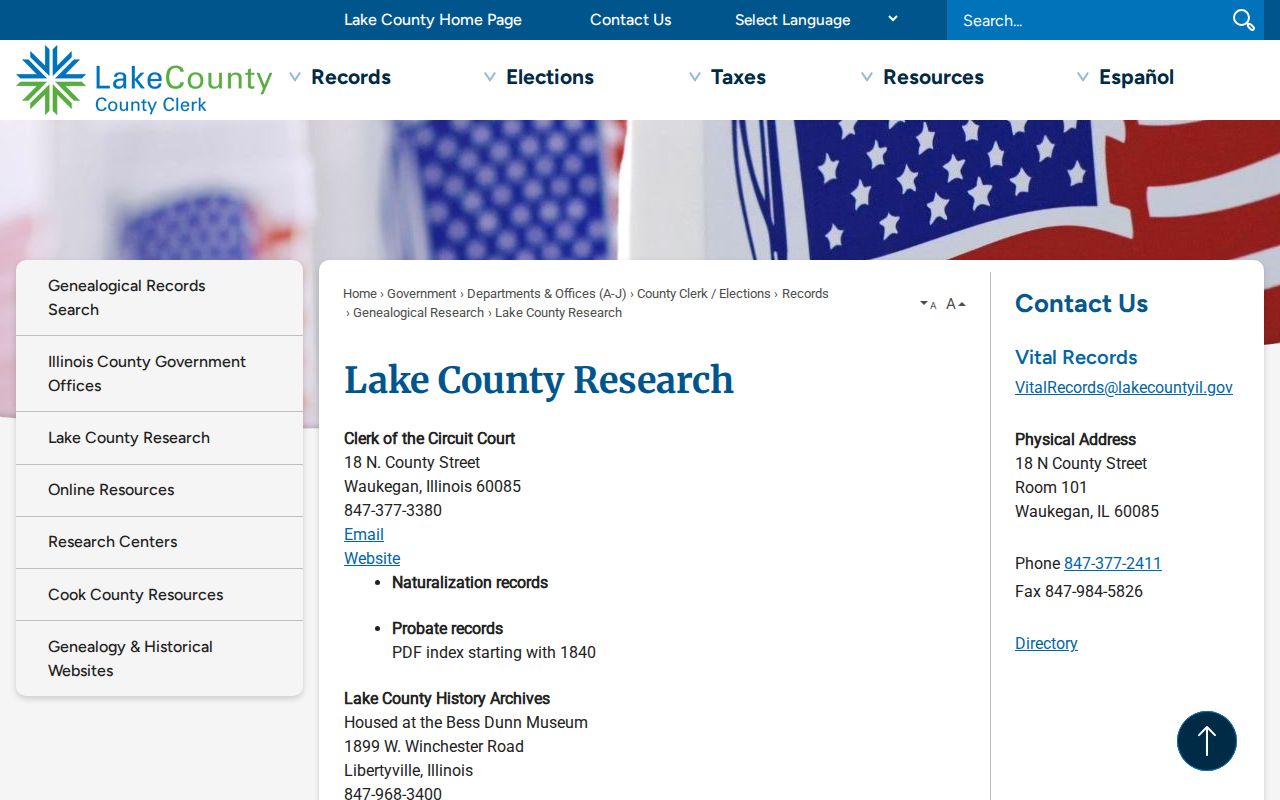
The county route is most useful when a directory gives a name and address but the next edition is missing or the household changes.
| 1874 onward | Documented Waukegan directory holdings begin. |
|---|---|
| 1930s-1950s | Waukegan-area telephone-book leads are listed. |
| 1970s onward | WNPL and the historical society develop local research collections. |
| Today | Digitized indexes sit beside print, microfilm, artifact, and archive access. |
Trace Family Through Gurnee Directories
Follow a household across dated editions, then use census schedules and newspapers to fill the years between. Gurnee may appear under a broader Waukegan-area title, so search nearby locality headings and keep the volume's own label. One appearance is not enough to establish a long stay.
- Start with a full name, rough date, and Gurnee, Warren Township, Waukegan-area, or street clue.
- Search the closest available editions. Record exact spelling, page, address, publisher, and year.
- Check any street-order or telephone section, but confirm that Gurnee is included in that volume.
- Pair the directory dates with publicly released census schedules, deeds, and local newspaper runs.
- Close the trail with an obituary, cemetery entry, probate lead, or eligible genealogy record.
A disappearance can mean a move, death, changed surname, publication gap, omitted locality, or a decision not to list. Test each possibility with a second dated source. For older official series, the Illinois Archives and IRAD Lake County catalog provides an archive route when library material supplies only a name and year.
Note: A directory address belongs to its edition date and should never be published as though it describes a person's current location.
Always preserve the repository and access date with a directory citation.