
Gurnee Previous Residents by Era
The source closest to the target year should lead. A recent owner trail starts with the parcel profile and modern recorder index. Older Gurnee previous residents require handwritten deed indexes, directory volumes, census schedules, newspapers, or archived local records. Coverage is uneven, and a volume titled for Waukegan may include suburban places differently from one edition to the next.
| Source | Years It Covers | Where Held | What It Shows |
|---|---|---|---|
| Modern land-record index | 1980-01-02 to 2026-08-21 displayed | Lake Official Record Search | Parties, dates, document number, address, PIN, legal fields |
| Historical deed index | 1841-1979 | Historical Record and county books | Handwritten grantor/grantee references |
| Assessor parcel profile | 2002-2026 tax years visible in sample | Lake CCAO/Treasurer | Owner display, situs, mailing, legal, transfer tabs |
| Historic parcel geometry | 1995-2024 | Lake County ArcGIS service | Dated parcel shape and PIN, not people |
| Waukegan-area directories | 1874 and clusters through current | Waukegan library holdings guide | Dated name and address, locality varies |
| Telephone books | 1930s-1950s listed | Waukegan Public Library | Telephone, address, or name lead |
| Federal census | Released under the 72-year rule | NARA and library databases | Household at the census date |
| Newspapers and obituaries | 1845-2018 runs, title gaps | Waukegan library | Dated family, death, and address clues |
Use a record's date, not its present online location, to decide its value. The web portal is only a newer access layer over records that began on paper, in bound index books, on maps, or on microfilm.
Date the Gurnee Address First
A house number without a year can join records that never referred to the same parcel. Write down the exact address as it appeared in the target era, including direction, suffix, unit, postal city, and ZIP when present. Add Gurnee, Warren Township, subdivision, and lot clues rather than forcing all sources under today's Village label.
Lake County's July 2019 dual-address program is a local trap. About 3,000 unincorporated properties were estimated to be affected, and Oglesby Avenue and Park Road were named as Gurnee-area examples. Keep old and new street strings, the effective notice date, PIN, and issuing authority together. A failed directory or deed search under one form may succeed under the other.
Note: A postal Gurnee line may fall outside the incorporated Village, so verify municipality and township on the parcel profile.
Trace Gurnee Owners Backward
The deed chain begins with today's parcel record, not a guessed surname. Open the Lake County property search and retain the PIN, owner display, situs and mailing fields, legal subdivision or lot, assessment year, and conveyance details. Then move to the Official Record Search. An index row is a lead; inspect or request the instrument itself.
- Copy the current owner, PIN, legal description, transfer document number, date, and deed type from the parcel profile.
- Find the instrument that transferred the parcel to the current grantee. Match its legal description, not just the street line.
- Take that seller, the grantor, and search the same person as a prior grantee for the same land.
- Repeat by document number, party, address, subdivision, legal text, and date. Mark every image or copy status.
- For 1841 through 1979, change to Historical Record and use handwritten books. A modern PIN may miss those instruments.
- Grantor and grantee
- The grantor transfers an interest; the grantee receives it.
- Chain of title
- The linked sequence of recorded transfers for the same land.
- Legal description
- The lot, subdivision, or metes-and-bounds text that identifies land when its street address changes.
The County does not perform or guarantee a full title search. Stop and mark uncertainty if parcels split, legal text changes, or a trust or entity interrupts the name chain.
Gurnee Deeds Before 1980
The recorder portal's modern Land Records department displayed January 2, 1980 forward during inspection. Earlier work belongs in Historical Record, which reaches 1841 through 1979 with handwritten grantor/grantee indexes. This portal split is one of the most useful clues for previous residents research. A blank PIN result before 1980 is not proof that no deed exists.
The successful official-record capture shows the current Lake County search entry used for the modern and historical paths.
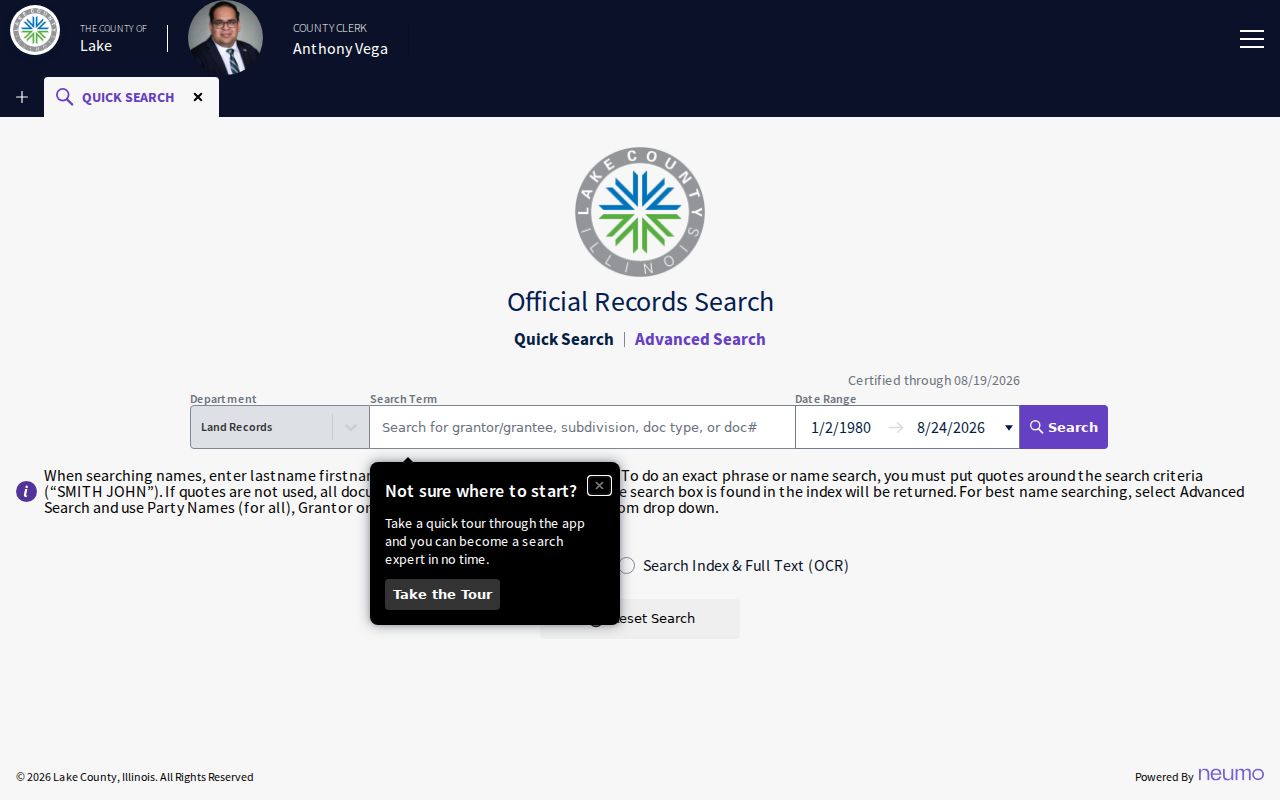
Try the party name, document number, legal description, subdivision, township, address, and OCR text. Public terminals and document-copy requests at the Recording Division remain part of the access chain when the online image is missing.
The Lake County Recording Division page identifies the current office and its official access routes.
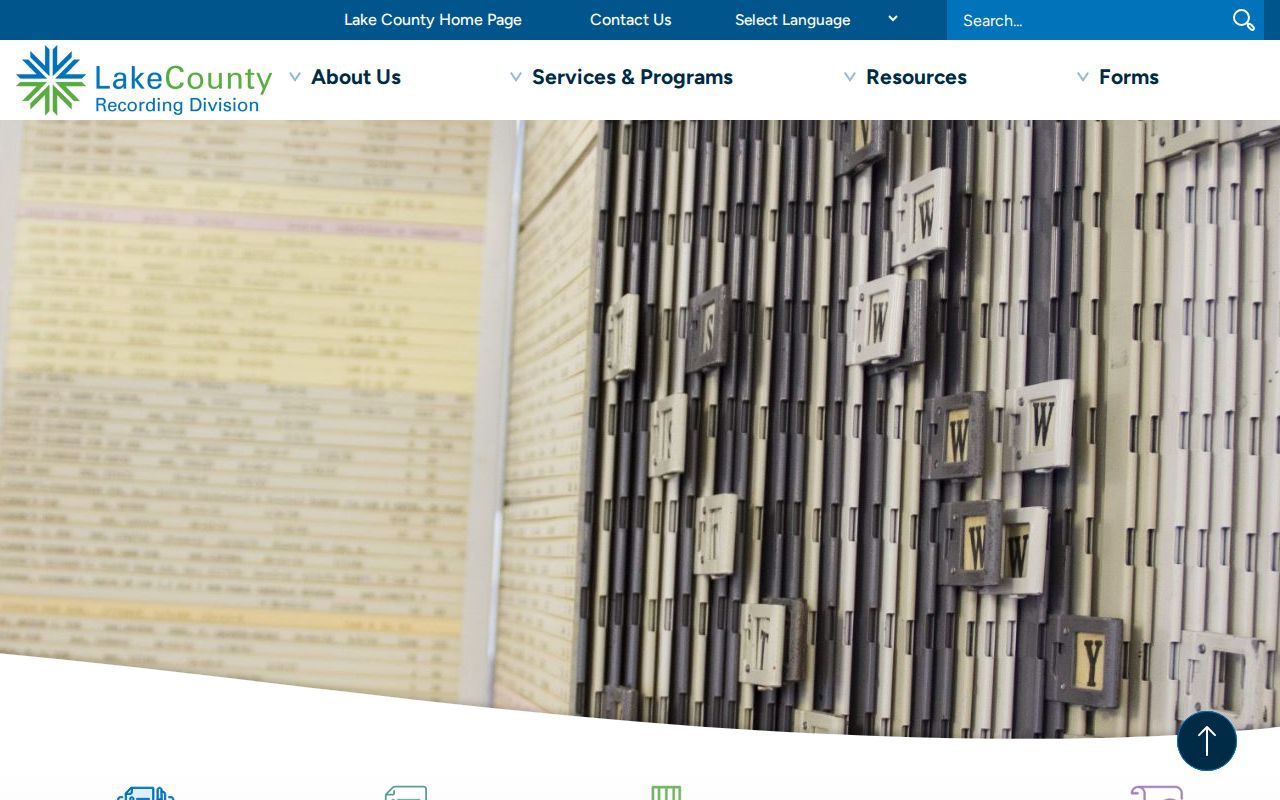
Use that office record to confirm current contact and copy procedures before ordering an older deed or index image.
Bridge Gurnee Parcel Changes
The county's Historic Parcels layer spans 1995 through 2024. Compare its dated shape and PIN with the current parcel to spot a split, consolidation, or subdivision change. A parcel polygon does not name a resident, but it can explain why a deed, tax profile, and directory appear to point at different house numbers.
County GIS maps, subdivides, and consolidates parcels from deeds and plats. Its online viewers are not surveys. For an ownership trail, carry the old and new PIN, legal description, subdivision, lot, and source date into the recorder search. For a household trail, preserve the street form used in each edition or census.
Gurnee Previous Residents at Libraries
Warren-Newport Public Library is the closest local-history starting point for Gurnee. The county's Research Centers description names digitized indexes to local-history binders, ArchiveGrid, Ancestry Plus, historical newspaper access, and research classes. Nearby Waukegan Public Library genealogy services add city directories, census material, maps, microfilm, newspapers, and a free obituary lookup by email when a name and death date are supplied.
The official Waukegan-area directory holdings list Polk and Harris volumes in many clusters from 1874 onward, plus telephone books from the 1930s through 1950s. Exact Gurnee street coverage and a complete reverse-directory run were not found online. Ask the reference desk for the target year, publisher, locality section, street index, and page. The broader collection map appears on the Gurnee city directories page.
Pair Gurnee Directories and Census
Directories can bridge the years between public federal census schedules. Pairing works best as a dated sequence rather than a name search alone:
- Find the address or surname in the directory closest to the target census year. Record its exact title, publisher, year, page, and locality heading.
- Search the public census for the same place, household name, and nearby street context. Account for the 72-year release rule.
- Compare household members, ages, relationships, and address placement only as shown in that schedule.
- Check the next directory edition to see whether the household remained, moved, or disappeared from the publisher's coverage.
- Use a deed, obituary, newspaper, or probate lead to explain the change, but do not merge same-name people without a second match.
A criss-cross directory is arranged by address or telephone number. An enumeration district is the small area assigned to one census taker. Both can help locate a house, but neither guarantees complete coverage.
Close Gurnee Trails with Obituaries
Newspapers and obituaries can explain why a name leaves an address trail. Waukegan Public Library lists title-specific newspaper runs from 1845 through 2018, with gaps, and offers an obituary lookup service. Supply a full name, approximate or exact death date, and contact information. Keep the paper title, issue date, page, and wording rather than recording only a transcribed name.
The Lake County Genealogical Records Search covers its indexed pre-1916 birth, death, and marriage material subject to the stated age rules. Probate indexes, cemetery lists, and Illinois Archives holdings may extend the trail. An heir or probate party is not proof of residence, so compare the name with the address and date in a second record.
The captured genealogy search page identifies the county's official historical vital-index route.
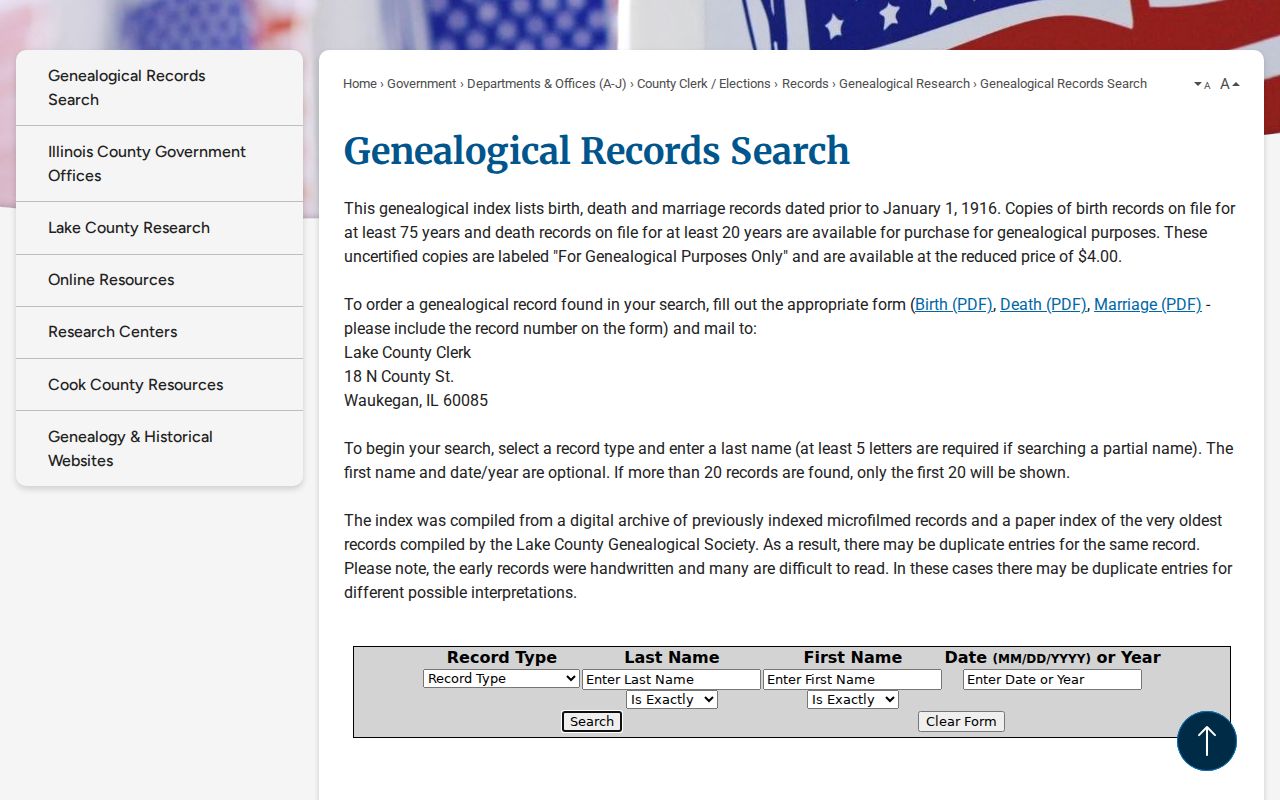
This index is a historical lead with record-age limits, not a current people directory.
How Gurnee Records Survived
Lake County was organized in 1839, and Waukegan became the county seat in 1841. The 1875 courthouse fire is a useful records story: county accounts say records were saved in an adjacent building. That does not guarantee that every series survived. An earlier Waukegan reading room was destroyed in the 1857 courthouse fire, so library and newspaper holdings must be checked by exact title and date.
Access later moved from handwritten books, plats, printed directories, newspapers, and microfilm to scanned indexes and map services. The Clerk and Recorder consolidated in December 2022, but older records may retain earlier office names. Search by the custodian and terminology used when the record was created.
Mother Rudd House supplies another Gurnee-specific layer. The building served as a stagecoach stop, voting place, post office, and town hall before becoming the Warren Township historical museum. Its artifacts and photographs offer context, not a complete address roster.
Limits on Gurnee Previous Residents
Owners are only half the address story. A deed party may never have occupied the parcel, and a directory occupant may never have owned it. Mailing addresses, estate parties, applicants on permits, and names in obituaries each represent different relationships. Retain the exact field label and date so a past resident is not turned into a current claim.
No official Gurnee Sanborn map run or complete reverse-directory series was located in the inspected sources. Historical permit and code files also lack a public search. Use the nearby official house-history guide, library reference desks, Community Development, a focused Village FOIA request, Illinois Archives or IRAD, and Recording Division public terminals as the documented fallbacks.
Lawful use. Research Gurnee previous residents for house history, genealogy, or personal curiosity. Never use old records to track, harass, or harm a living person.